
Link:
Host–Microbiome Interactions in Gastrointestinal and Liver Diseases
The Peuker Lab is an independent research group within the Department of Internal Medicine A at University Medicine Greifswald. We investigate how intestinal microorganisms, epithelial barrier dysfunction and immune responses shape inflammation, cancer development and metastatic progression in the gastrointestinal tract and the liver.
Our research combines mechanistic mouse models, human-to-mouse microbiota transfer in germ-free animals, intestinal organoid systems and human samples with microbiome profiling, metabolomics, single-cell analyses and spatial technologies. Ultimately, we aim to leverage insights into microbiota-dependent mechanisms to develop new biomarkers, preventive strategies and therapeutic approaches.
Research areas
Microbial regulation of colorectal cancer and liver metastasis
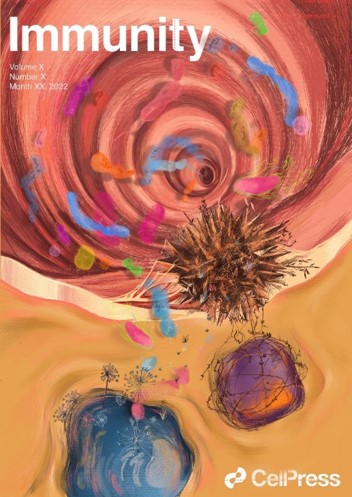
Colorectal cancer develops within a complex ecosystem composed of epithelial, immune, stromal and microbial components. Our previous work identified intestinal barrier dysfunction and microbiota-dependent activation of calcineurin–NFAT signaling as important regulators of colorectal tumor development and anti-tumor immunity (Peuker et al., Nat. Med. 2016; Peuker et al., Immunity 2022).
Building on these findings, we investigate how intestinal microbial communities and microbial metabolites influence colorectal cancer progression and the development of liver metastases. A particular focus lies on age-dependent differences in tumor progression, epithelial barrier function and systemic anti-tumor immunity.
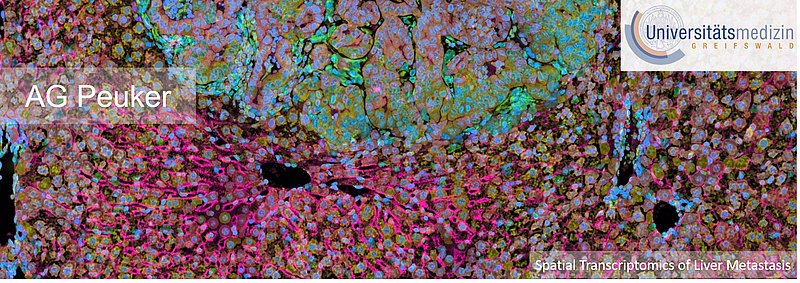
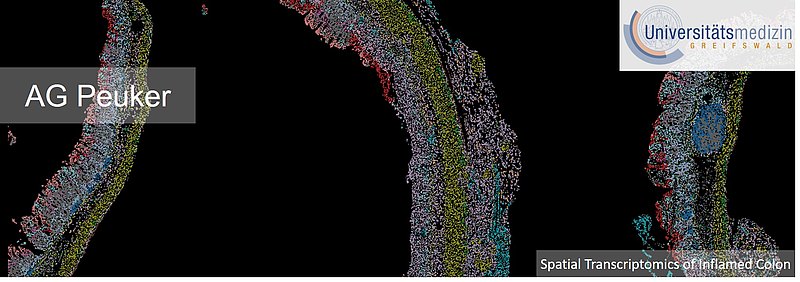
Using orthotopic and inflammation-associated tumor models, organoid systems and single-cell and spatial analyses, we aim to define how signals originating in the intestine shape the metastatic environment in the liver.
-
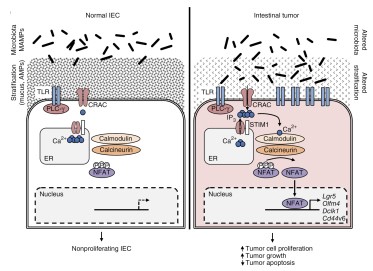
Figure 1. Barrier dysfunction and microbial regulation of epithelial tumor cells in CRC (Peuker et al., Nat. Med. 2016) -
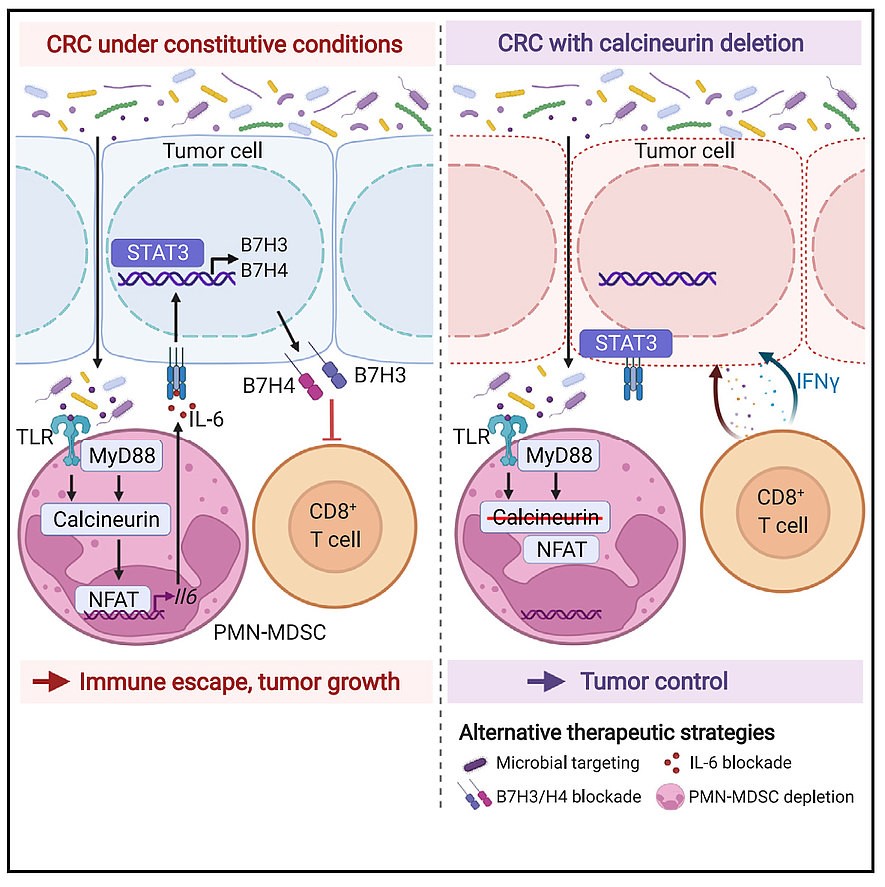
Figure 2. Microbiota-dependent immunological crosstalk in CRC (Peuker et al., Immunity 2022)
The gut–liver axis in chronic liver disease and liver cancer
The liver is continuously exposed to microbial products and metabolites reaching it from the intestine through the portal circulation. Disturbances of the intestinal barrier and microbiome may therefore contribute to chronic liver inflammation, metabolic liver disease and hepatocellular carcinoma.
We investigate how microbial signals interact with hepatocytes, non-parenchymal liver cells and tumor-infiltrating immune populations during liver disease and liver cancer. Current projects address microbiota-dependent mechanisms in metabolic dysfunction-associated steatotic liver disease, hepatocellular carcinoma and colorectal liver metastasis.
Our goal is to identify common and disease-specific mechanisms through which the intestinal microbiome regulates hepatic inflammation, immune surveillance and tumor progression.
Intestinal barrier dysfunction and inflammatory bowel disease
Intestinal inflammation results from a complex interaction between host susceptibility, epithelial barrier function, the immune system and environmental or microbial triggers.
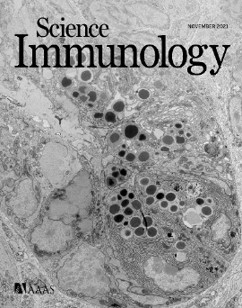
Our research investigates how defects in epithelial and antimicrobial defense promote susceptibility to intestinal inflammation. One model of particular interest is XIAP deficiency, a monogenic disorder associated with impaired microbial control and inflammatory bowel disease (Strigli et al., Science Immunology 2021).
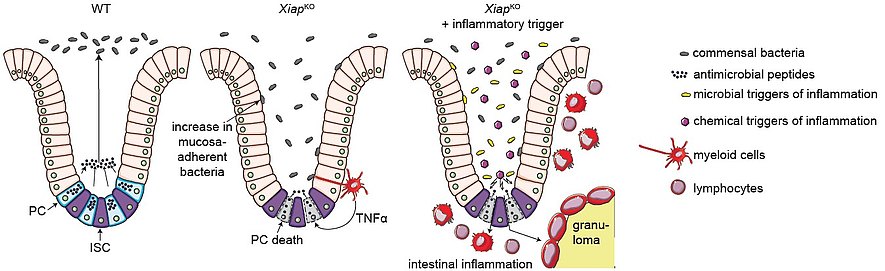
In addition, we develop and evaluate new strategies to restore intestinal homeostasis. These include local hydrogel-based approaches, microbial and metabolite interventions and studies in murine and human intestinal organoid systems.
Team
Our interdisciplinary team brings together researchers with backgrounds in biomedical sciences, medicine, microbiology, immunology, organoid biology and experimental disease modeling.
We value scientific curiosity, methodological rigor, open communication and collaborative work across disciplines and career stages. Students, doctoral researchers and postdoctoral scientists are encouraged to develop independent ideas while contributing to shared projects and the broader scientific direction of the lab.
Group leader
Dr. rer. nat. Kenneth Peuker
Kenneth.Peuker@med.uni-greifswald.de
Tel. +49 (0)3834 86-80478
Postdoc; Administrative coordinator
Dr. rer. nat. Anne Strigli
Anne.Strigli@med.uni-greifswald.de
Tel. +49 (0)3834 86-80478
Judith Günther, M. Sc. (PhD student)
Jan Wackerfuß, M. Sc. (PhD student)
Abdul Basit, M. Sc. (PhD student)
Sebastian Schmidt (MD student)
Simon A. Lattke (MD student)
Vivien Haschke (MD student)
Malte Juan Pokora (MD student)
Gedeon Reinhardt (DMD student)
Lea Thomas, M. Sc. (Research assistant)
Luise Wichmann, M. Sc. (Research assistant)
Previous Thesis
Lea Thomas, M. Sc. - 2026 "Die Rolle mikrobieller Treiber in chronisch-entzündlichen Darmerkrankungen."
Luise Wichmann, M. Sc. - 2026 "The impact of bacterial metabolites on intestinal epithelial homeostasis"
Georgie Baier, M. Sc. - 2025 "Altersabhängige Pathogenese des kolorektalen Karzinoms"
Research environment and collaborations
The Peuker Lab is embedded in a broad interdisciplinary network of national and international collaborations. Our group contributes experimental disease models, human-to-mouse microbiota transfer in germ-free animals, intestinal organoid systems and expertise in host–microbiome interactions and the gut–liver axis.
Collaborations with partners in Kiel, Bern, Dresden, Aachen and other institutions provide complementary capabilities in microbiome modeling, biomaterials, clinical cohorts, computational biology, multi-omics technologies and translational research. Joint projects address intestinal barrier dysfunction, inflammatory bowel disease, colorectal cancer, liver metastasis and chronic liver disease.
Representative Publications
-
Peuker K, Strigli A, Tauriello DVF, Hendricks A, von Schönfels W, Burmeister G, Brosch M, Herrmann A, Krüger S, Nitsche J, Južnić L, Geissler MM, Hiergeist A, Gessner A, Wirbel J, Ponnudurai RP, Tunger A, Wehner R, Stange DE, Weitz J, Aust DE, Baretton GB, Schmitz M, Röcken C, Hampe J, Hinz S, Zeller G, Chavakis T, Schafmayer C, Batlle E, Zeissig S. Microbiota-dependent activation of the myeloid calcineurin-NFAT pathway inhibits B7H3- and B7H4-dependent anti-tumor immunity in colorectal cancer. Immunity. 2022 Apr 12;55(4):701-717.e7.
Strigli A*, Gopalakrishnan S*, Zeissig Y*, Basic M, Wang J, Schwerd T, Doms S, Peuker K, Hartwig J, Harder J, Hönscheid P, Arnold P, Kurth T, Rost F, Petersen BS, Forster M, Franke A, Kelsen JR, Rohlfs M, Klein C, Muise AM, Warner N, Nambu R, Mayerle J, Török HP, Linkermann A, Muders MH, Baretton GB, Hampe J, Aust DE, Baines JF, Bleich A, Zeissig S. Deficiency in X-linked inhibitor of apoptosis protein promotes susceptibility to microbial triggers of intestinal inflammation. Sci Immunol. 2021 Nov 5;6(65):eabf7473. *contributed equally
Južnić L*, Peuker K*, Strigli A, Brosch M, Herrmann A, Häsler R, Koch M, Matthiesen L, Zeissig Y, Löscher BS, Nuber A, Schotta G, Neumeister V, Chavakis T, Kurth T, Lesche M, Dahl A, von Mässenhausen A, Linkermann A, Schreiber S, Aden K, Rosenstiel PC, Franke A, Hampe J, Zeissig S. SETDB1 is required for intestinal epithelial differentiation and the prevention of intestinal inflammation. Gut. 2021 Mar;70(3):485-498. doi: 10.1136/gutjnl-2020-321339. Epub 2020 Jun 5. PMID: 32503845; PMCID: PMC7873423. *contributed equally
Zeissig S, Peuker K, Iyer S, Gensollen T, Dougan SK, Olszak T, Kaser A, Blumberg RS. CD1d-Restricted pathways in hepatocytes control local natural killer T cell homeostasis and hepatic inflammation. Proc Natl Acad Sci U S A. 2017 Sep 26;114(39):10449-10454.
Peuker K*, Muff S*, Wang J, Künzel S, Bosse E, Zeissig Y, Luzzi G, Basic M, Strigli A, Ulbricht A, Kaser A, Arlt A, Chavakis T, van den Brink GR, Schafmayer C, Egberts JH, Becker T, Bianchi ME, Bleich A, Röcken C, Hampe J, Schreiber S, Baines JF, Blumberg RS, Zeissig S. Epithelial calcineurin controls microbiota-dependent intestinal tumor development. Nat Med. 2016 May;22(5):506-15. *contributed equally
Zeissig Y, Petersen BS, Milutinovic S, Bosse E, Mayr G, Peuker K, Hartwig J, Keller A, Kohl M, Laass MW, Billmann-Born S, Brandau H, Feller AC, Röcken C, Schrappe M, Rosenstiel P, Reed JC, Schreiber S, Franke A, Zeissig S. XIAP variants in male Crohn's disease. Gut. 2015 Jan;64(1):66-76.
-
Upcoming Conferences and Events
Past Conferences and Events
Our Research at the 3rd CCC-MV Symposium
-
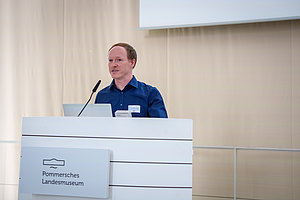
Dr. Kenneth Peuker introducing our young investigator group and its research focus at the symposium. (Copyright: Prof. Dr. Dr. Adrian Schwarzer) 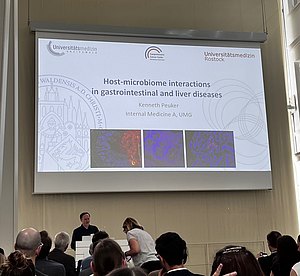
Dr. Kenneth Peuker presenting on "Host-microbiome interactions in gastrointestinal and liver diseases" at the Comprehensive Cancer Center Mecklenburg-Vorpommern symposium. (Copyright: Dr. Anne Strigli) -
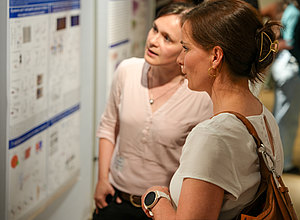
Scientific exchange and discussion of our research findings during the poster session. (Copyright: Prof. Dr. Dr. Adrian Schwarzer) 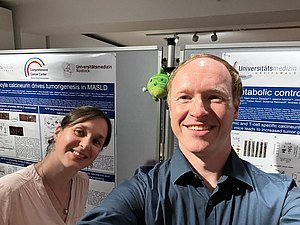
Full motivation ahead of the poster presentation at the CCC-MV symposium. (Copyright: Dr. Anne Strigli)
-
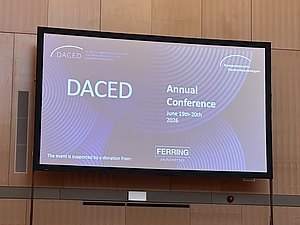
Opening title slide of the DACED Annual Conference (June 19–20, 2026), organized by the German Working Group on Chronic Inflammatory Bowel Diseases. (Copyright: Simon Lattke) 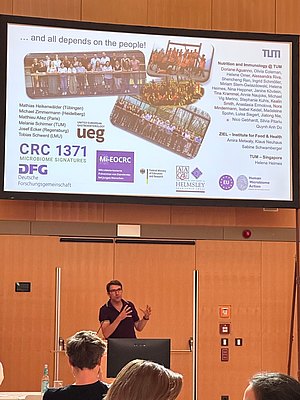
Prof. Dirk Haller presenting his microbiome research - one of the scientific highlights of the DACED Annual Conference 2026. (Copyright: Simon Lattke) -
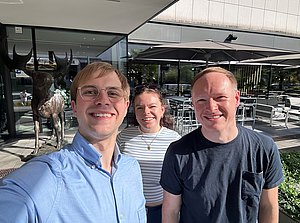
Dr. Peuker, Lea Thomas, and Simon Lattke outside the conference venue during the DACED Annual Conference 2026 in Frankfurt am Main. (Copyright: Simon Lattke) 
View of the Frankfurt skyline from the Main riverbank on a sunny afternoon during a break from the DACED Annual Conference 2026. (Copyright: Simon Lattke)
Awards and Honors
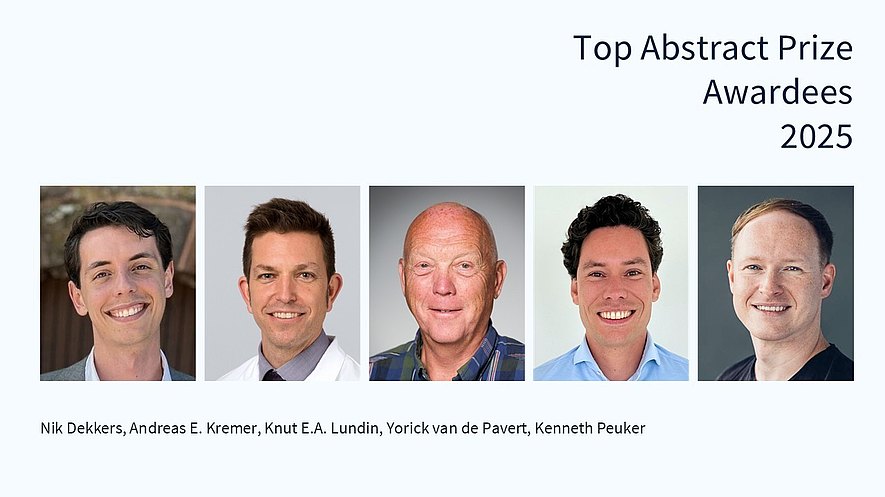
Top Abstract Prize 2025 - UEGW
Kenneth Peuker: METABOLIC CONTROL OF ANTI-TUMOR IMMUNITY BY CALCINEURIN
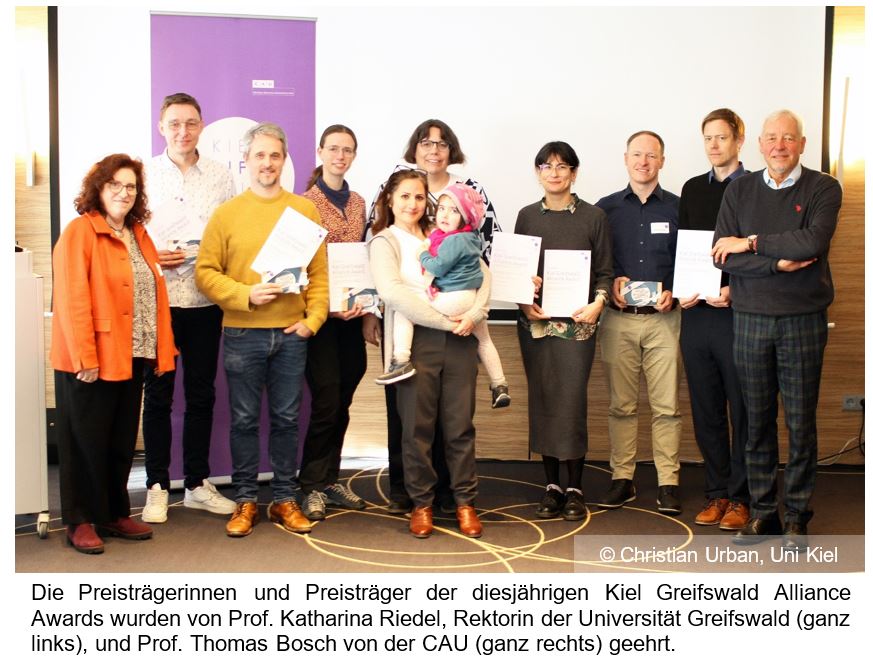
Kiel Greifswald Alliance Award 2026
Dr. Joana P. Bernandes (Kiel) and Dr. Kenneth Peuker (Greifswald): "Untersuchung der Unterscheidung zwischen adultem und spät auftretendem Colitis ulcerosa: Organoidmodelle zur Kartierung von Alterung und Entzündung im Darmepithel"